HR Bottlenecks That Stop U.S. & Canadian Companies From Growing
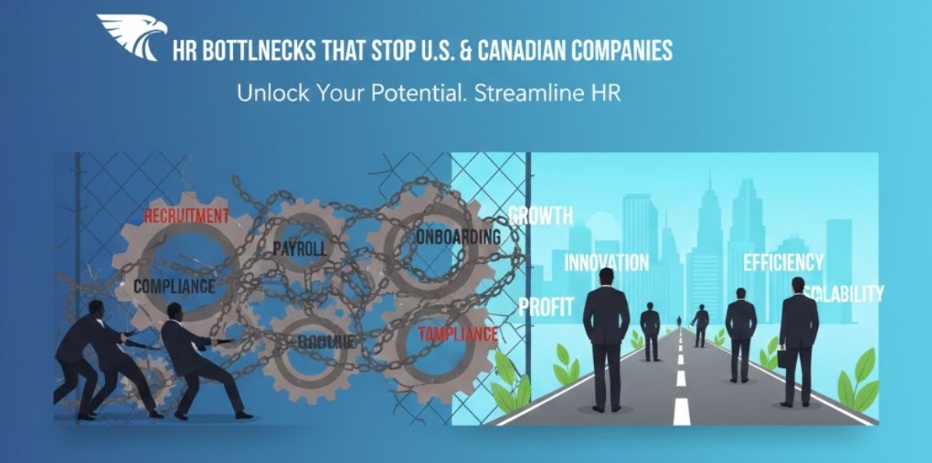
Human Resources is no longer just an administrative function; it is a critical driver of business growth. Yet, many U.S. and Canadian companies struggle to scale effectively because of HR bottlenecks that slow operations, increase costs, and reduce employee productivity. These bottlenecks often arise from manual processes, outdated technology, lengthy hiring cycles, poor onboarding, and high employee turnover. For growing organizations, each inefficiency compounds over time. Manual payroll, leave tracking, and compliance management consume hours that could be spent on strategic initiatives like talent development, employee engagement, or workforce planning.
Similarly, slow recruitment processes and poor onboarding prevent companies from getting new hires up to speed, delaying critical projects. Outdated HR systems and fragmented tools create duplicate work and reporting errors, while compliance challenges in the U.S. and Canada add further complexity.
Understanding these bottlenecks and their impact is essential for companies aiming to scale sustainably. By identifying the key pain points and implementing streamlined processes, automation, and integrated HR technology, organizations can free HR teams to focus on strategic growth, improve employee engagement, and ensure operational efficiency.
Understanding HR Bottlenecks and Their Impact
Manual HR Processes and Administrative Overload
Manual HR processes remain one of the top bottlenecks for growing organizations. These include tasks such as:
- Maintaining spreadsheets for employee records
- Tracking leave requests via email
- Processing payroll manually
- Handling onboarding paperwork by hand
Impact:
- Consumes significant HR staff time
- Leads to duplicate work and frequent follow-ups
- Increases the likelihood of errors in payroll or compliance reporting
As companies scale, the workload grows proportionally. For example, a team of five HR professionals managing 200 employees may need to double in size when headcount reaches 400 if processes remain manual.
Lengthy Hiring Cycles and Talent Acquisition Challenges
Recruiting the right talent quickly is essential for business growth. Lengthy hiring cycles can result from:
- Unstandardized job postings
- Delays in interview scheduling
- Inefficient applicant tracking systems
Consequences:
- Top candidates accept offers elsewhere
- Projects are delayed due to unfilled roles
- Recruitment costs increase as vacancies remain open longer
In the U.S., competition for skilled labor is fierce, especially in tech and healthcare. Canadian companies often face additional challenges due to regional labor shortages and immigration processing times.
Poor Onboarding and Employee Integration
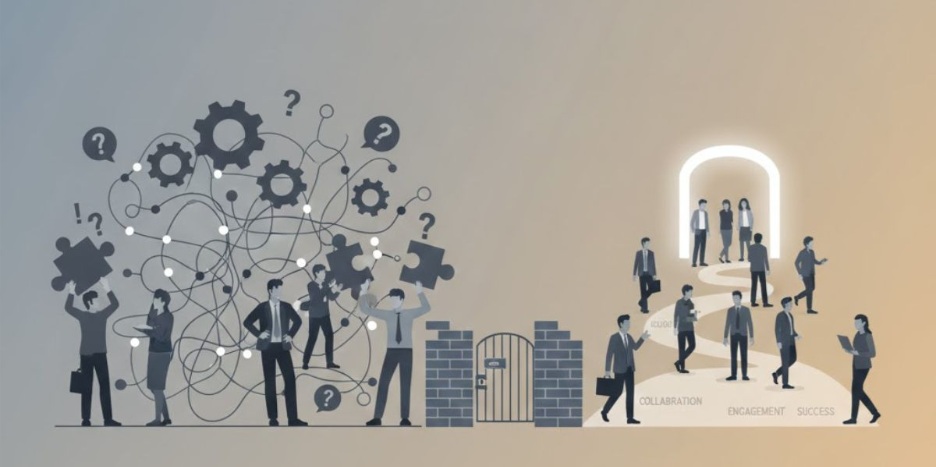
A strong onboarding process accelerates productivity and improves retention. However, poor onboarding often includes:
- Lack of role clarity or expectations
- Delayed access to systems and tools
- Minimal training or mentorship
Consequences:
- New hires take longer to reach full productivity
- Increased early turnover
- Reduced employee engagement
Companies that implement structured onboarding see up to 50% faster ramp-up times for new employees.
High Employee Turnover and Retention Issues
Employee turnover is one of the costliest HR inefficiencies. Costs include:
- Recruitment fees and advertising
- Onboarding and training
- Lost productivity and team morale
Statistics: Replacing an employee can cost 30% to 200% of their annual salary, depending on the role.
High turnover disrupts business continuity and slows growth by constantly requiring HR to focus on administrative hiring tasks instead of strategic initiatives.
Outdated HR Technology and System Fragmentation
Many companies still rely on disconnected HR systems or outdated software. This can include:
- Standalone payroll or benefits platforms
- Spreadsheets for performance management
- Paper-based attendance tracking
Impacts:
- Duplicate work and data entry errors
- Slow reporting and decision-making
- Low employee adoption of HR tools
Investing in integrated HR software reduces manual effort and improves efficiency. Modern platforms often include automation for payroll, recruitment, onboarding, and performance tracking.
Compliance Challenges
HR compliance is complex in both the U.S. and Canada:
- U.S.: FLSA, EEOC, state labor laws
- Canada: Employment Standards Act (provincial variations), health and safety regulations
Manual tracking of compliance increases the risk of errors, audits, and penalties. HR teams often spend time correcting mistakes instead of focusing on strategic growth.
HR Bottlenecks and Employee Engagement
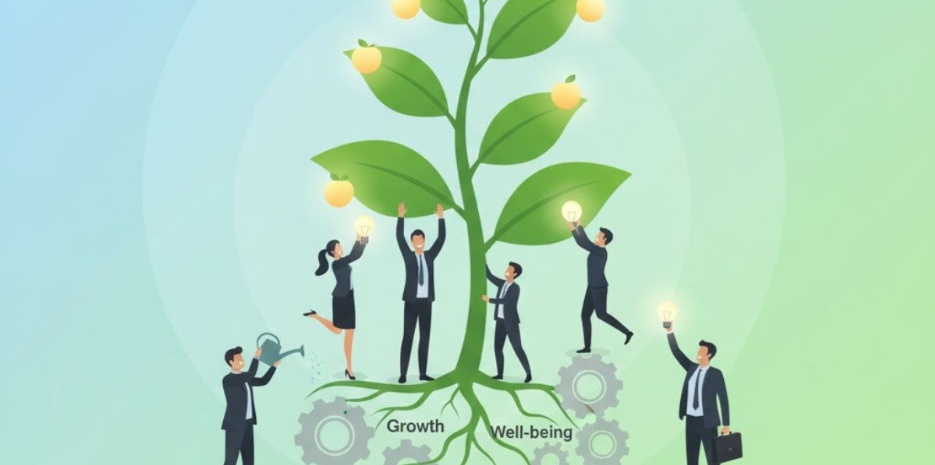
Inefficient HR processes directly affect employee satisfaction. Common issues include:
- Delayed approvals and feedback
- Poor communication about benefits or policies
- Lack of recognition and development opportunities
Consequences:
- Reduced employee engagement
- Lower productivity
- Higher turnover
Companies that streamline HR processes foster engagement, enabling teams to be more innovative and productive.
Common HR Bottlenecks, Impacts, and Solutions
|
HR Bottleneck |
Impact on Growth |
Suggested Solution |
|
Manual HR processes |
High admin workload, errors, slow decision-making |
Implement automation and integrated HR systems |
|
Lengthy hiring cycles |
Missed talent, delayed projects |
Standardize recruitment, use applicant tracking systems |
|
Poor onboarding |
Slow productivity, higher early turnover |
Develop structured onboarding programs |
|
High employee turnover |
Recruitment costs, lost productivity |
Enhance engagement, career paths, retention programs |
|
Outdated HR technology |
Duplicate work, low efficiency |
Upgrade to integrated HRIS with automation |
|
Compliance challenges |
Fines, audits, additional HR workload |
Use compliance management tools and centralized tracking |
|
Employee disengagement |
Lower productivity, higher attrition |
Streamline HR processes, recognize achievements, provide training |
Solutions: Streamlining HR for Growth
Addressing HR bottlenecks requires a combination of technology, process improvement, and employee focus. Key solutions include:
- Automate repetitive tasks
Payroll, leave requests, and performance tracking can be automated to free HR for strategic work. - Implement integrated HR systems
Modern HR software eliminates fragmentation and ensures accurate, real-time data. - Streamline recruitment and onboarding
Faster hiring cycles and structured onboarding improve productivity and retention. - Focus on engagement and retention
Recognition, training programs, and clear career paths reduce turnover and foster growth. - Monitor compliance proactively
Use tools to track labor law requirements, reporting deadlines, and audit readiness.
Conclusion
HR bottlenecks—manual processes, lengthy hiring cycles, poor onboarding, high turnover, outdated technology, compliance gaps, and low engagement—are major obstacles to growth for U.S. and Canadian companies.
By streamlining HR processes, investing in technology, and focusing on employee experience, companies can reduce administrative burdens, cut costs, and free HR teams to contribute strategically. In today’s competitive labor markets, modern HR is not just a support function—it’s a growth driver.
FAQs on HR Bottlenecks
Q1: What are HR bottlenecks?
A: HR bottlenecks are inefficiencies in human resources processes that slow down operations, increase costs, and prevent companies from scaling effectively. Examples include manual administrative tasks, slow hiring cycles, outdated HR systems, and compliance challenges.
Q2: Why do manual HR processes slow company growth?
A: Manual processes like spreadsheets, paper forms, and email approvals consume HR time, increase errors, and require more staff as the company grows. This prevents HR from focusing on strategic initiatives that drive growth.
Q3: How does high employee turnover impact business growth?
A: High turnover increases recruitment, onboarding, and training costs, reduces productivity, and lowers team morale. Replacing employees can cost 30–200% of their annual salary, creating both financial and operational setbacks.
Q4: What role does outdated HR technology play in bottlenecks?
A: Outdated or fragmented HR systems create duplicate work, errors, and slow reporting. They reduce efficiency, prevent real-time decision-making, and increase administrative overhead, which hampers company growth.
Q5: How do HR bottlenecks affect employee engagement?
A: Delayed approvals, poor communication, lack of recognition, and inefficient processes frustrate employees. This reduces engagement, lowers productivity, and increases the likelihood of turnover.
Q6: Can automating HR processes improve efficiency and reduce costs?
A: Yes. Automation streamlines payroll, leave management, recruitment, and performance tracking, reducing manual work, improving accuracy, and allowing HR teams to focus on strategic growth initiatives.